Chapter 7 in this book is talking about the identities and Chapter 8 is talking about the system. Personally I enjoy reading chapter 7 a lot, but do not really like chapter 8.
In chapter 7, the author told us that our personal identity can influence the overall environment. it can express the individual, companies, and even the nation. Everyone has their own identities, these identities shows ones own culture background and their personalities. If the designer design the product specially for a group of people, he or she should considered their special identity, and includes it into their design. I really like the examples that the author use in the book. Its just easy to read and many fun facts. This thought makes me think more about the products around me. When I saw something that is familiar to me or has the element that relate to my culture, I would feel more comfortable and safety by using it.
As for chapter 8, the author talks about how to combine different elements efficiently. For example, the rad sign can express more than one informations, such as the limited speed, location, exits and so on. The author said that the effectiveness of any system will dependent upon its overall coherence,with clear standards enabling users rapidly to understand and navigate their way through without undue problems.
During this week, we've learned "Design for accessibility" and we also saw a video about the wheel chair.
A good design should not only has a pretty appearance, it should also has to adopt the community. According to the census, there is a big portion of disability, elder, and kids in the United States. These people have faced social and technical barriers. In order to break these barriers, we should make our designed products become more universal, which means the design that benefit people of all ages and ability.
We also saw a video "Hot Wheel" during class. John Hokinberry designed a wheel chair, which can climb stairs, adjust the height of the chair (allowed the disabled people become the same height as the regular people), and use on the sand. As you can tell, these improvements can make the life of the disabled people become easier, especially to adjust the height. Normally, we expected people who use the wheel chair to be shorter than us, but thats just normally what we see in the current society. If there is a wheel chair that can make the disabled people become the same height as the normal people, that would make the life of the disabled people become a lot easier. Even though, John has a great idea about the wheel chair, the wheel cost too much that not everyone can buy it in the market. I hope the designer can solve these problems in the future.
Aubrey Beardsley is one of the greatest graphic illustrators in the world. His works are all in black and white, emphasized the grotesque, the decadent, and the erotic. Beardsley also contribute to the development of art Nouveau style and the poster movement.
Beardsley was born in August, 1872, in Brighton, England, a middle class family. His father worked irregularly at London breweries. Beardsley's mother provided a slender income by giving piano lesson. Beardsley was considered as an artist when he was really young. His sister, Mabel, who was also really talented, and became an actress later on. His parents marriage wasn't very happy, his father was undertaken to marry another women.
In 1885, Beardsley first published a drawing and cartoons in the school news paper of Bristol Grammar School Past and Present. In 1888, he also posted his work in an architect's office, and then in the Guardian Life and Fire Insurance Company. Later on, he became an clerk in London and met many friends in the publishing industry. In 1891, Beardsley was suggested to take a formal art education. He attended class at the Westminster School of Art.
During 1893 and 1894, Beardsley start to producing illustration and covers for books and periodicals. Also in 1893, Beardsley formed an alliance with the person who was catapult him to game and prove his down fall, Oscar Wilde.
In February of that year (1893), Wilde's scandalous play Salome was published in its original French version. An illustration inspired by the drama was admired by Wilde and Beardsley was commissioned 50 guineas to Illustrate the English edition. This assignment was the beginning of celebrity but also of an uneasy, and at times unpleasant, friendship with Wilde, which officially ended when Wilde was tried and convicted of sodomy in 1895.
Although Beardsley was aligned with the homosexual clique that included Oscar Wilde and other English aesthetes, the details of Beardsley's sexuality remain in question. Speculation about the artist's sexuality include the rumors of an incestuous relationship with his elder sister, Mabel, who may have borne his miscarried child.
Aubrey Beardsley was the most controversial artist of the Art Nouveau era, renowned for his dark and perverse images and the grotesque erotica. He explored the themes in his later work. His most famous erotic illustrations were on themes of history and mythology, such as his illustrations for Lysistrata and Salomé.
Beardsley died from tuberculosis when he was only 25.
Salome
Actually this is my favorite painting form Beardsley. I saw this picture first, the features in this picture are really unique. People's face remain resentment. Then I read the story of Salome. It was about a princess who fall in love with a prophet. She proposed to him, yet he refused it. The princess fells ashamed and killed the prophet. In this picture, the princess hold the prophet's head. We can see from this picture that Beardsley used a lot of Japanese elements in his work. Such as the dragon skin on the top left of the painting. Besides, Beardsley has created his own signature, which shows on the bottom of the right corner.
Isolde
Aubrey Beardsley published this painting during 1895 for the Studio magazine of the tragic opera heroine drinking the love potion. Well, I think it might because Beardsley's love experience was not smooth, so he likes to depict and ironic the love and the dark side of the society. One of the reason that i really like his work is that all his painting seems to have a huge background behind it. It can evoke my imagination by looking at his work.
Lucian
References: Aubrey Beardsley: An overview: http://www.victorianweb.org/art/illustration/beardsley/index.html
Art in the picture: http://www.artinthepicture.com/artists/Aubrey_Beardsley/
1.The real name of Le Corbusier is Charles-Edouard Jeanneret.
2.He is a Swiss architect, designer and painter. He has made a big contribution in architecture. He is also famous for his Modern Architecture or the International style.
3. Le Corbusier was born in Switzerland and became a French citizen in his thirties.
Here is also a short 3-D demonstration video about Villa Savoye. I think it is really cool.
4. After designed Villa Savoye, Le Corbusier came up with the Five Point in Architecture. Which are (1) the pilotis elevating the mass off the ground, (2) the free plan, achieved through the separation of the load-bearing columns from the walls subdividing the space, (3) the free facade, the corollary of the free plan in the vertical plane, (4) the long horizontal sliding window and finally (5) the roof garden, restoring, supposedly, the area of ground covered by the house.
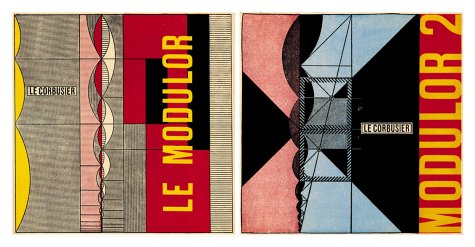
5. Le Corbusier apply the "Vitruvian Man" in to the architecture. He found our the golden ration use it in his Modulor system for the scale of architectural proportion.
6. Le Corbusier began by learning the art of metal engraving at first, then he was encouraged by a teacher to take up architecture. He built his first house at the age of 18 for a member of his school's teaching staff.
7. This chair is designed by Le Corbusier during 1928. It was also called as "cushion basket", which he designed as a modernist response to the traditional club chair. These pieces reverse the standard structures of sofas and chairs by having frames that are externalized.
8. Le Corbusier was awarded the Frank P. Brown Medal in 1961.
9. Le Corbusier was died on August 27, 1965, a heart attack. He against his doctor's order and went for a swim in the Mediterranean Sea. His body was found by a bathers and he was pronounced dead at 11 a.m.. 10.Le Corbusier began experimenting with furniture design in 1928 after inviting the architect, Charlotte Perriand, to join his studio.
Reference: Five Point of Architecture, http://famusoa.net/achin/courses/le_corbusier/essay-tse-5.pdf
Design with reach, http://www.dwr.com/category/designers/h-l/le-corbusier.do
I really enjoyed reading chapter 4,5,6 in this book.
It talks about object, communication and environment.
The author explain some fact in industrial design for object, graphic design in communication, and interior design in the environment.
The interesting part of the object is that people like highly individual and innovative product. Sometime, the product was just very innovative in its visual side, yet it doest useful. The rich people would still buy those expensive and functionless stuff. The high class would buy different stuff from the poor. So The goods are indicators of social and cultural status.
Well I think the graphic designer is a tough job. For their design, they have to make their product readable and globalized. In addition, they also have to add their own, special though on it. The designer has to think about their clients cultural background, and in what field this product is gonna be used. Because the graphic design is two-dementional, the only way it can communicate with the viewer is its content. I like the example that the author used to demonstrate the power of graphic design. The passport application form in the U.K. was once a tortuous process, but the effective graphic devices make the process much easier to be understand.
As for the environment, I think the interesting part of it is when the interior designer designed a public place, he or she can use different theme to emphasis on "experience" or "fun". The interior designer can show his or her own thought in the public design. The survey in the book shows that most of the American and Europeans has their own thought about how to decorate their houses, so sometime, its hard for the interior designer to express their own thought a small house owner.
Its interesting to see the difference among these three subjects. There are some differences and connections among these three branches under the design department.
1. Zaha Hadid is a famous architect. She also designed many urbanized product through interior to furniture.
2. She received a mathematic degree before she went to school in Architectural Association school of Architecture in London.
3. Zaha also taught architecture in many schools. Such as the Knowlton School of Architecture (Ohio State University), Harvard university, Columbia University and so on.
MAXXI (one of her famous design)
4. Zaha, in 2004, became the first woman to receive the Pritzker Architecture Prize. (Pritzker Architecture Prize is an award that honor the living architect who produce consistent and significant contribution to humanity and the built environment through the art of architecture.)
5. One of her famous architecture is The Contemporary Art Center in Cincinnati, Ohio. It is her first project in the United States. The famous design feature of this building is the Urban Carpet. My teacher in the architecture 200 talked about this building before. I found a really cool video in youtube. This video explain the main concept of this building.
6. Zaha Hadid formed a formed a studio in 1980, it starts with five employees. For now, her studio has a staff of more than 300 people, and almost half of them are under 30.
7. As we can see, most of her works are asymmetry. It was because when she was a child in Baghdad, she was thrilled by the asymmetric mirror. It evoked her interest in the asymmetry things.
8. I find a video of her famous work in Youtube.
Some of her famous architects are: Vitra Fire Station, Rosenthal Centre for Contemporary Art, BMW Central Building, Phaeno Science Center, and MAXXI: Italian National Museum of XXI Arts.
9. Zaha has won a lot of international competitions, but many of her winning designs were initially never built, such as the peak Club in Hong Kong (1983) and the Cardiff Bay Opera House in Wales (1994). In 2002, Hadid won the international design competition to design Singapore's one-north masterplan. In 2005, her design won the competition for the new city casino of Basel, Switzerland.
Dancing Tower (signature tower)
10. Signature Tower used to be called Dancing Tower. When she fist present it in her exhibition, people do not really like this tower. The fluid character of the towers is generated through an intrinsically dynamic composition of volumes. The three towers rise above the creek and project themselves as an icon fro the surrounding developments and for the gulf region.
References:
New York Times, Zaha Hadid, http://topics.nytimes.com/topics/reference/timestopics/people/h/zaha_hadid/index.html